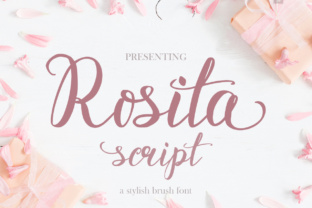
Rosita Script: A Brush Font That Feels Like Hand-Lettering
There's a specific kind of lettering that catches your eye immediately—it looks personal, energetic, and undeniably human. You see it on café menus, boutique packaging, wedding invitations, and Instagram graphics that stop you mid-scroll. That quality of effortless elegance is exactly what Rosita Script delivers. This modern brush font doesn't just sit on a page; it brings warmth, movement, and personality to every project it touches.
What makes Rosita Script stand out in a crowded market of script fonts is its versatility paired with authenticity. Many brush fonts lean too far into casual territory, sacrificing polish for personality, or they overcorrect and lose the handcrafted charm entirely. Rosita strikes a balance that feels natural—like someone with genuine calligraphy skill sat down and wrote your headline by hand, but with the consistency and scalability that digital projects demand.
Why This Typeface Works Across So Many Projects
If you've ever struggled to find a font that feels both modern and approachable, you're not alone. Plenty of designers and business owners cycle through dozens of options before landing on something that actually fits. Rosita Script earns its place in a font library because it adapts to different contexts without losing its identity.
Consider the range of applications where a premium font like this genuinely makes a difference:
- Brand identity work — A bakery, florist, or lifestyle brand needs typography that communicates warmth without looking amateur. Rosita gives logos and brand marks an artisanal quality that signals care and craftsmanship.
- Packaging design — On product labels, boxes, and bags, this script font adds shelf appeal. It draws the eye in retail environments where consumers make split-second decisions based on visual impression.
- Social media graphics — Instagram stories, Pinterest pins, and Facebook posts benefit enormously from fonts that feel personal. Rosita Script reads as genuine rather than corporate, which matters when you're competing for attention in fast-scrolling feeds.
- Wedding and event invitations — The flowing character of this typeface lends itself beautifully to formal and semi-formal stationery. It carries an elegance that works for save-the-dates, menus, and signage.
- Website headers and hero sections — When used strategically for headlines and accent text, Rosita adds visual interest to web design without compromising the overall layout structure.
- Editorial layouts and blogs — Pull quotes, chapter headings, and featured article titles benefit from a handwritten font that breaks up the monotony of body text set in a standard serif or sans serif font.
- Merchandise and print materials — From tote bags and t-shirts to business cards and brochures, a creative font with strong character helps physical products feel intentional and curated.
The common thread across all these uses is emotional connection. Typography isn't just about readability—it's about how something makes your audience feel. Rosita Script communicates approachability, creativity, and attention to detail in ways that more rigid display fonts simply cannot.
Understanding the Character Options That Set It Apart
One detail that often separates a good typeface from a great one is the breadth of its character set. Rosita Script includes a wide assortment of alternates, ligatures, and stylistic variations that allow you to customize lettering far beyond what a basic font offers. This matters more than most people realize.
When every instance of the letter "r" or "s" looks identical, script fonts can appear mechanical and repetitive—ironic for something meant to look hand-drawn. With alternates available, you can swap in different versions of common letters to create a more organic, varied texture. The result is custom lettering that genuinely looks like someone wrote it by hand, not like a template was applied.
For designers working on logo design specifically, this flexibility is invaluable. A wordmark set in Rosita Script can feel completely unique to a brand simply by selecting the right combination of alternate characters. You're not just picking a font—you're crafting a visual signature.
Pairing Rosita Script with Other Fonts
No font exists in isolation. The real power of any typeface emerges when you pair it thoughtfully with complementary styles. Rosita Script works best as an accent or headline font, which means you'll want a reliable companion for body copy and supporting text.
A few pairing strategies worth testing:
- With a clean sans serif font — Pairing Rosita with something like a geometric or neo-grotesque sans serif creates a modern, balanced contrast. The script adds personality while the sans serif keeps longer passages readable. This combination works well for web design, social media graphics, and marketing assets.
- With a classic serif font — For editorial design, invitations, or upscale branding, combining Rosita with a traditional serif typeface produces a sophisticated layered look. Think wedding stationery or a boutique hotel's printed collateral.
- With a simple sans serif at varying weights — Using a single sans serif family in bold, regular, and light weights alongside Rosita creates hierarchy without visual clutter. This approach works particularly well for brand identity systems where consistency across touchpoints is essential.
The key principle is contrast without conflict. You want your fonts to feel like they belong together without competing for attention. Set test layouts before committing—view your pairings at actual size, on actual devices, and in actual contexts. A combination that looks elegant at 72pt on your monitor might feel cramped at 14pt on a mobile screen.
Readability Considerations for Real-World Use
Every designer has encountered the temptation to use a beautiful script font everywhere. Resist it. Rosita Script, like any brush or handwritten font, is most effective when deployed strategically rather than universally.
Here's a practical framework for keeping your projects readable:
- Use Rosita for headlines, titles, and short phrases — These are contexts where the font's personality can shine without creating comprehension challenges.
- Avoid setting paragraphs or long-form text in script — Even the most legible script font becomes exhausting to read in extended passages. Your audience will disengage before they finish the first sentence.
- Pay attention to size and spacing — Brush fonts often need more generous letter-spacing and line-height than their serif or sans serif counterparts. Test at multiple sizes to find the sweet spot where beauty and clarity coexist.
- Consider your medium — A font that reads beautifully on a printed poster might struggle on a small phone screen. Responsive design means thinking about typography across every device and format your audience encounters.
- Check color contrast — Thin brush strokes can disappear against busy backgrounds or low-contrast color combinations. Always verify that your text stands out clearly from its surroundings.
Professional presentation comes from these small, deliberate choices. Your audience might not consciously notice good typography, but they'll absolutely notice when something feels off.
Licensing and Practical Considerations
Before incorporating any font into a commercial project, verify the licensing terms. Rosita Script is available as a commercial font, meaning you can use it for client work, products for sale, and business materials—but always review the specific license you're purchasing. Some licenses cover desktop use only, while others extend to web fonts, app embedding, or merchandise production.
If you're a small business owner or freelancer investing in design assets, think of font licensing as part of your professional toolkit. A quality typeface with proper commercial licensing protects you legally and ensures your brand materials look consistent across every application. It's a small investment that pays dividends in visual credibility.
Also take time to explore all the included styles and weights when you download. Many designers purchase a font and only use the default version, missing out on alternates and extras that could elevate their work significantly. Spend thirty minutes exploring the full character map—you'll likely discover options that solve design problems you didn't even know you had.
Bringing It All Together
Typography decisions shape how people perceive your work before they read a single word. A font like Rosita Script offers something genuinely useful: the ability to inject warmth, personality, and handcrafted quality into digital and print projects without sacrificing consistency or scalability. Whether you're building a brand identity from scratch, designing packaging for a new product line, creating social media content that actually connects, or laying out an editorial piece that demands visual interest, having a versatile script font in your toolkit changes what's possible.
The best typography choices aren't about following trends—they're about matching the right visual voice to your specific message and audience. Test Rosita Script in your own context. Set your headlines, check your pairings, view your layouts at actual size. When a font fits your project naturally, you'll feel it immediately—and so will everyone who encounters your work.