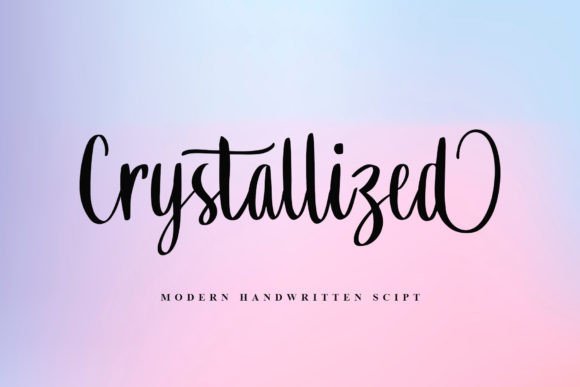
Why Crystallized Script Feels Like a Personal Touch in a Digital World
The Anatomy of an Elegant Handwritten Font
From Brand Identity to Product Packaging: Real-World Applications
Branding and Logo Design: For businesses in the wellness, beauty, boutique retail, or artisanal food space, a script font can be the cornerstone of a memorable brand identity. Imagine Crystallized Script as the primary wordmark for a luxury candle brand, a yoga studio, or a custom stationery shop. It instantly conveys craftsmanship, care, and a personal touch. Paired with a clean sans-serif for body text, it creates a sophisticated and cohesive visual system that enhances brand recognition.
Packaging and Print Materials: On a physical product, typography is tactile. Using Crystallized Script on packaging for gourmet goods, cosmetics, or specialty gifts adds perceived value and elegance. It turns a simple label into a piece of art. This extends to all print collateral—think business cards with a scripted name, letterheads that feel personal, or brochures that invite the reader in.
Digital Presence and Social Media: In the fast-scrolling world of social media, grabbing attention is paramount. A well-placed, beautiful script font can stop the scroll. Use Crystallized Script for Instagram quote graphics, Pinterest pins promoting a blog post, or as accent text in Facebook ad graphics. On a website, it can be used sparingly for impactful elements like a hero section headline, a special announcement, or a stylized pull quote in a blog post, adding a layer of visual interest without sacrificing the readability of the main content.
Editorial and Invitations: For bloggers and content creators, this font is perfect for creating standout featured images or stylized chapter headings in digital guides and e-books. For event planners or individuals, it is an obvious choice for designing beautiful save-the-dates, wedding invitations, and event programs that set the tone from the very first glance.
Practical Guidance for Pairing and Presentation
First, consider the font pairing. Script fonts are display fonts by nature—they are meant for headlines, accents, and short phrases, not for long paragraphs. The golden rule is to pair them with a highly readable neutral font. A simple, geometric sans-serif (like Montserrat, Poppins, or Lato) or a classic, clean serif (like Lora or Merriweather) will provide a stable foundation that lets the script shine without creating visual chaos. Test your pairings at various sizes to ensure harmony.
Second, mind the context and readability. While Crystallized Script is designed for clarity, always consider your medium and audience. Is the text meant to be read quickly on a mobile device? Is it for a logo that will be scaled very small? In such cases, you might use the script for a single initial or a very short word, pairing it with your primary body font for everything else. Always conduct a “squint test”—if you squint and the text becomes an unreadable blur, simplify.
Third, explore the full font family. Many premium font packages include stylistic alternates, swashes, or multiple weights. Check what comes with Crystallized Script. Does it have a regular and a bold version? Are there different ‘a’ or ‘g’ styles? These extra glyphs give you more creative control, allowing you to customize the look for a specific project and avoid having every piece of work look identical.
Finally, be mindful of licensing. If you plan to use the font for commercial projects—for a client’s logo, on products for sale, or in marketing materials—ensure you have the correct commercial license. This is a non-negotiable step in professional practice and protects both you and your client.
Making Your Creative Ideas Come Alive